
Restrictive covenants are a legal instrument registered registered on the title of a property that restrict how the land can be used.
Commonly included in real estate transfers or purchase agreements, they are a type of property control between a property owner and other parties such as municipalities. These covenants operate independently of municipal zoning bylaws.
Covenants can help prevent land banking, which is when investors buy land with the intention of holding it for future sale or development, instead of using or developing it, with the goal of profiting from the land’s anticipated increase in value over the long-term due to future demand, municipal rezoning, or the development of infrastructure nearby (eg. highways, bridges, transit, etc.).
Land banking can contribute to housing shortages if large areas of developable land are privately held and not developed in response to market demand.
Prince Edward County uses restrictive covenants when selling industrial land within the industrial to a developer to ensure development is completed in alignment with the County’s planning principles
It is the current practice of the County of Prince Edward to apply these covenants to industrial lands sold by the municipality within the existing industrial park. We cannot speak to past practices from previous administrations and whether they applied to all industrial sales or not.
Covenants have been registered on properties as far back as at least 1990. If the County is conveying lands, it does so with the purpose of these lands being developed in alignment with the County’s planning principles. The municipality then reserves the right to ensure that this development is completed in accordance with these principles, and this protection comes by way of these restrictive covenants/options to purchase. The County of Prince Edward does not generally own vacant lands to be sold and used for purely residential or commercial purposes the way it does industrial lands, so these restrictions do not typically arise in residential/commercial settings.
Prince Edward County Communications representative
The County’s standard offer form for selling industrial park lots includes a number of restrictions imposed on the buyer:
Construction must start within 12 months and finish within 24 months or the property must be returned to the municipality
Restrictive covenants like this are a type of use-it-or-lose-it (UIOLI) enforcement by tying land use to time-based conditions, but unlike UIOLI policies that are applied via the Planning Act, result in loss of building permits, longer timelines, more fees, and allow for an appeals process, they are a legally binding clause that results in automatic land reclamation.
Construction and erection of a building on the Property in compliance with the Site Plan Agreement made between the Corporation and the Purchaser shall be commenced bona fide by the Purchaser within twelve (12) months of the date of registration of a deed to the Property from the Corporation to the Purchaser and said building shall/ be substantially completed to the satisfaction of the Corporation within twenty-four (24) months of the registration date of the said deed, failing which the Corporation may, at its option, at any time thereafter, require the Purchaser/to reconvey the Property to the Corporation free of all liens, mortgages, debentures, security, encumbrances, work orders at a price equal to the purchase price paid by the Purchaser to the Corporation for the Property less One Thousand ($1,000.00) Dollars and the Purchaser shall execute and deliver to the Corporation all such deeds and assurances and obtain and register all such discharges and releases as may be requisite in order to convey good title free and clear of all liens and encumbrances and vacant possession to the Corporation within thirty (30) days of having been requested to do so in writing by the Corporation.
Note: This was removed from the example agreement above.
Municipality has first right to repurchase if property is sold before construction is complete
This clause is to ensure municipally-owned land is not purchased and then “flipped” for a profit. It gives the municipality power to prevent land flipping or speculative resale before development is completed, which something UIOLI doesn’t explicitly address.
No sale or conveyance of the Property or any part thereof may be made by the Purchaser to any person or corporation, prior to the substantial completion of the construction and erection of the building as aforesaid, unless the Corporation shall have first been given the option to repurchase the property, free of all liens, charges or encumbrances, whatsoever at a price equal to the purchase price paid by the original Purchaser from the Corporation for the Property, less One Thousand ($1,000.00) Dollars such option to be exercised by the Corporation within ninety (90) days of receipt by it of written notice of such option, provided that if the Corporation exercises the option, the transaction arising there from shall be completed within thirty (30) days of the exercise of the option and the provisions of paragraphs 1 (b), (c), (d) (e) and (f) shall apply mutatis mutandis and if the Corporation fails to exercise the option within the said ninety (90) days, the Purchaser shall be at liberty to sell or convey the property for the same or a greater price.
Notwithstanding such sale to a new purchaser, such new purchaser shall continue to be bound by all the covenants, terms, conditions and restrictions contained in this Schedule and any reference to purchase price shall continue to mean the purchase price paid by the original purchaser from the Corporation. For the purpose of this paragraph, if the Purchaser is a corporation, the word “sale”, in addition to its ordinary meaning, shall be deemed to mean and include a sale or disposition of the corporate shareholding of the Purchaser, if the Purchaser is a corporation which results in a change in the effective voting control of the Purchaser by the person or persons who, at the date of this indenture, holds or hold a majority of the corporate shares.
Restrictive covenants are stronger than Ontario’s UIOLI policies
Restrictive covenants like these are a type of use-it-or-lose-it (UIOLI) enforcement by tying land use to time-based conditions, but unlike UIOLI policies that are applied via the Planning Act, result in loss of building permits, longer timelines, more fees, and allow for an appeals process, they are a legally binding clause that results in automatic land reclamation.
These clauses are stronger and more enforceable than most current UIOLI policy ideas in Ontario, with clearer remedies and fewer loopholes.
Other examples of restrictive covenants
In 2021, CN’s guidelines for the development of sensitive uses in proximity to railways include policies developed by the Railway Association of Canada and the Federation of Canadian Municipalities address noise isolation measures:
The Owner shall through restrictive covenants to be registered on title and all agreements of purchase and sale or lease provide notice to the public that the noise isolation measures implemented are not to be tampered with or altered and further that the Owner shall have sole responsibility for and shall maintain these measures to the satisfaction of CN.
Restrictive covenants expire after 40 years if a duration is not set
If a covenant has an explicitly fixed duration of say 100 years, then it survives beyond the 40‑year default. The courts have found that “forever” does not count as a set duration. The practical limit is 999 years.
Where a condition, restriction or covenant has been registered as annexed to or running with the land and no period or date was fixed for its expiry, the condition, restriction or covenant is deemed to have expired forty years after the condition, restriction or covenant was registered, and may be deleted from the register by the land registrar.
Section 119 (9) of the Land Titles Act
Housing Affordability Task Force report recommended extending the maximum period
38. Amend the Planning Act and Perpetuities Act to extend the maximum period for land leases and restrictive covenants on land to 40 or more years
Report of the Ontario Housing Affordability Task Force
Removal of restrictive covenants
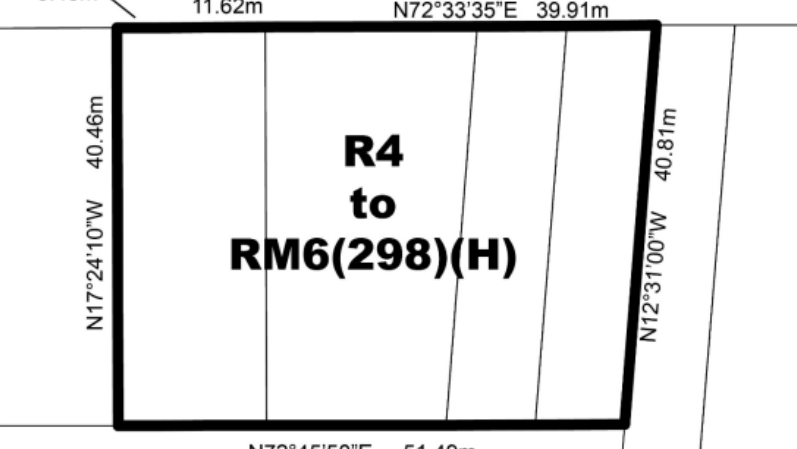
Belleville attaches restrictive covenants to industrial property it sells, but it seems as though they do not include them for commercial or residential properties. In some cases, the covenants are removed upon request:



Comments
We want to hear from you! Share your opinions below and remember to keep it respectful. Please read our Community Guidelines before participating.