
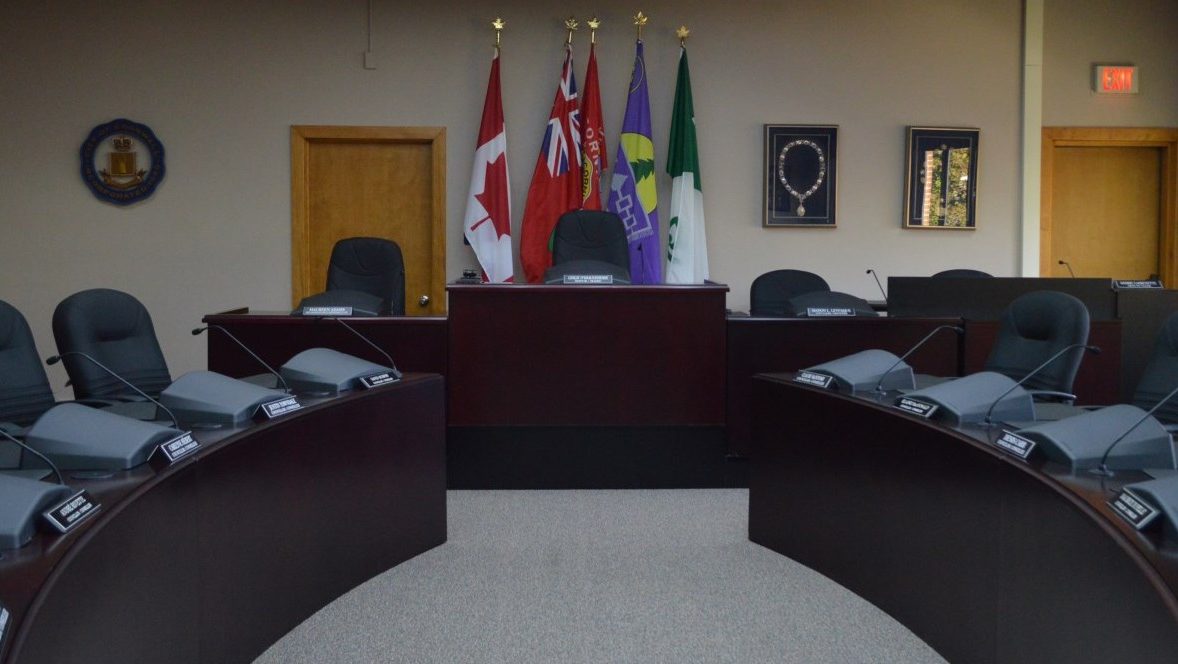
Regular Council is the formal body made up of all members of council.
Regular council meetings are formal meetings chaired by the Mayor where Council members make final, binding decisions by voting on motions (turning them into resolutions), passing bylaws based on the recommendations provided by advisory committees.
Meetings are scheduled at a specific time and place at regular intervals – typically every 2 weeks or once a month – as set by the municipal Procedural By-law (eg. 7:00PM on the second and fourth Wednesday of each month at City Hall) or approved by Council or committee as part of an annual or multi-year calendar. They must be open to the public by default.
Municipalities are required to have a public notice policy of regular meetings. The Ontario Ombudsman recommends that the public notice include the date, time, and place of the meeting as well as the meeting’s agenda. For example:
Annually on or before December 31, a schedule of dates, times and places of regular Council meetings for the following year shall be prepared and made available to the public by posting it at the Public Notice Posting Place
Regular Council vs Committee of the Whole
While both meetings consist of all Council members, they serve different stages of the decision-making process:
- Committee of the Whole serves as a less formal forum for policy debate and public input to facilitate the decision-making process. It addresses matters that do not fall under a standing committee’s mandate or items requiring the collective input of all representatives prior to formal Council action.
- Regular Council is the formal meeting where Council officially receives recommendations from COW (and other committees) to make final, binding decisions. Many items that come to Council for a final decision have already been through Committee of the Whole.
What laws govern council meetings?
- Municipality’s Procedural Bylaw
- Municipal Act
- Municipal Freedom of Information and Protection of Privacy Act
Regular Council meetings must be open to the public (as with all municipal committee meetings), with some exceptions.
If you believe that a meeting was closed to the public improperly (ie. the reason doesn’t fall within one of the 14 exceptions), you can submit a complaint to the Ontario Ombudsman.


Comments
We want to hear from you! Share your opinions below and remember to keep it respectful. Please read our Community Guidelines before participating.