
Permits to Take Water (PTTW) are required by the Ministry of the Environment, Conservation and Parks (MECP) for companies taking more than 50,000 litres of water daily from the environment (lakes, rivers, or aquifers) for commercial, industrial, or irrigation purposes.
While these permits are technically regulated by the Ministry, a closer look reveals that for many, the water itself is essentially free.
Water taken (referred to as “takings” or “water takings”) from environmental sources:
- Surface water (eg. river, stream, lake, pond)
- Groundwater (eg. aquifer)
for the purposes of:
- Irrigation
- Aggregate washing
- Dewatering
- Dust suppression
- Food processing – washing
- Food processing for a cheese production plant
- Stormwater management
- Underground exploration drilling
- Groundwater remediation
- Cooling water
- Snowmaking
- Bulk water sales/delivery
- Communal water supply
- Paper manufacturing
- Water and wastewater treatment
are regulated by the Ontario Water Resources Act and Ontario Regulation 387/04 – Water Taking and Transfer, unless the water taking activity is exempt or requires an Environmental Activity and Sector Registry (EASR) registration, where O. Reg. 63/16 applies.
Permits issued are posted on the Environmental Registry of Ontario (select “Ontario Water Resources Act” under Act in the sidebar). The full dataset is available in the Open Data Catalogue and you can view all the Permits to Take Water on a map.
Approved PTTWs are given an expiry date and a set of legally binding terms and conditions to protect water resources and to prevent interference with other water users.
How much does water cost?
Water is legally a shared public resource, yet the price tag for extracting it varies wildly depending on who you are and what you do with it.
- Permit application fee: A one-time “processing fee” ($750 to $3,000) paid to the Ministry.
- Water taking charge: An annual “usage rent” ($3.71 or $503.71 per million litres) paid only by “Phase 1” industrial/commercial users.
Most companies pay nothing for the water they take
Most companies (like golf courses) pay the Application Fee but $0 in Water Taking Charges.
The government traditionally views golf courses and agriculture as non-consumptive users who “return” much of the water to the environment through infiltration, while critics point out that much is lost to evaporation or runs off into different areas from where it was taken.
- Golf courses
- Farms
- Aquaculture
- Aggregate/gravel/quarries
- Food manufacturers
- Mining
- Ski hill
- Religious organizations (eg. Watch Tower Bible and Tract Society of Canada)
- Charities (eg. YMCA)
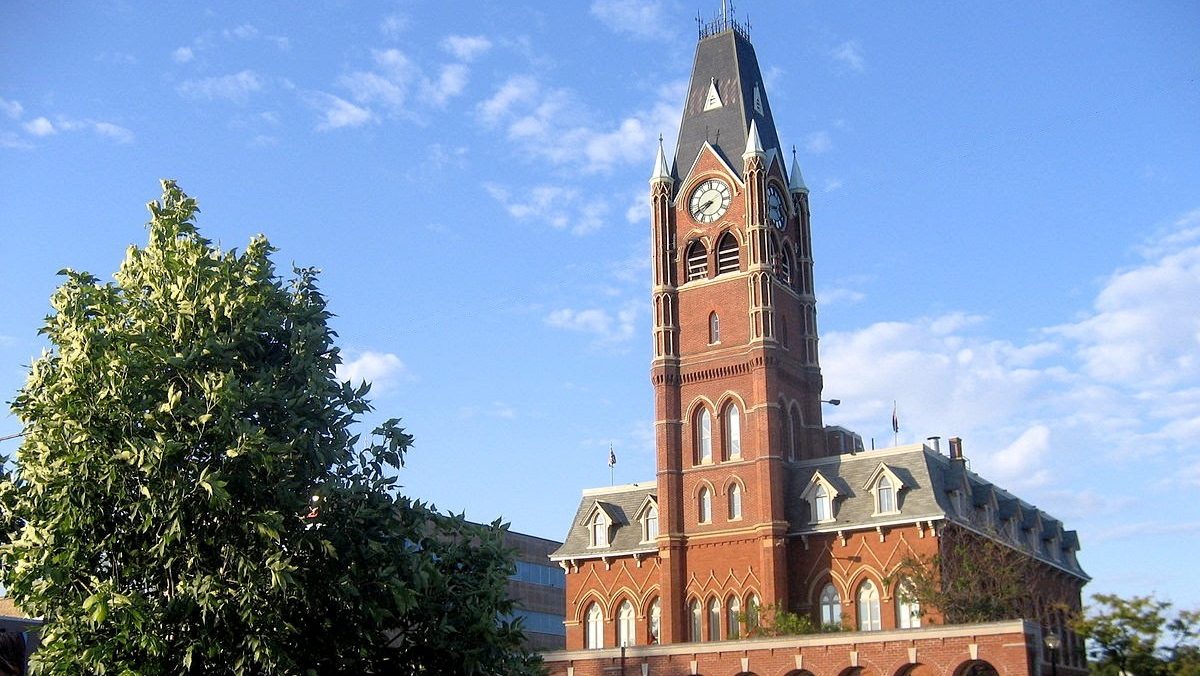
- Municipalities (eg. City of Belleville)
Consumptive users
For consumptive users that take water out of the local watershed, “lock” it into a product and ship it away, the Government of Ontario charges $3.71 per million litres. They include:
- water-bottling facilities
- beverage manufacturing facilities
- fruit and vegetable canning or pickling facilities
- ready-mix concrete manufacturing facilities
- other non-metallic mineral product manufacturing facilities
- pesticide, fertilizer and other agricultural chemical manufacturing facilities
- other inorganic chemical manufacturing facilities
- water delivery services (swimming pools/hot tubs, construction wells/cisterns, events, ice rinks) (eg. Kingston Water)
Effective August 1, 2017, water-bottling facilities with permits to take water must pay an additional $500 for every million litres of groundwater taken (for a total of $503.71 per million litres).
Low water conditions
Conservation Authorities’ Water Response Teams consisting o local representatives from municipal and provincial governments and other interest-holders and issues water level notices under the Ontario Low Water Program (OLWP) program:
- Normal: Flows are in the normal range and precipitation accumulation has been close to average.
- Low Water Level 1: early indication of a potential drought condition.
- Flows are less than 70 percent of their normal summer low flow and/or precipitation has been less than 80 per cent of average. Water users are asked to voluntarily reduce consumption by 10 per cent.
- Low Water Level 2: increased likelihood of drought conditions.
- Flows are less than 50 percent of their normal summer low flow and/or precipitation has been less than 60 per cent of average. The Ministry of the Environment, Conservation and Parks will send letters to holders of Permits to Take Water to ask them to voluntarily reduce their consumption by 20 per cent.
- Low Water Level 3: high likelihood of drought conditions (does not imply an emergency).
- Flows are less than 30 percent of their normal summer low flow and/or precipitation has been less than 40 per cent of average. There is also potential for economic harm to water takers and/or significant harm to the ecosystem. The Water Response Team may ask the province to impose mandatory restrictions on those holding Permits to Take Water.
If a WRT declares a Level 3 condition, they will notify the Ministry of Natural Resources. The Director then reviews before making a formal “Under Stress” determination. Conservation Authorities generally cannot legally force a Permit to Take Water (PTTW) holder to stop pumping. They issue the Advisory and recommend that the Province step in.
If a source of supply is “under stress,” the Director must post a notice, giving them the power to “prepare and consult on a strategy to manage the permitted water takers within the geographic area.”
Where the Director determines, having regard to all the information available to the Director, that one or more ground or surface sources of supply are under stress, in whole or in part, the Director shall post an information notice to that effect on the environmental registry pursuant to section 6 of the Environmental Bill of Rights, delineating the geographic area where the source or sources of supply are under stress and providing a summary of the information and analysis the Director relied on in making the determination.
Section 4(5)
Example
In September 2025, Quinte Conservation declared a Level 3 low water condition:
Quinte Conservation and the Low Water Response Team have declared a Level 3 Low Water Condition due to lack of rainfall and low flows in local rivers and streams.
As part of the Level 3 Low Water Condition declaration, Quinte Conservation will be communicating with its 18 municipalities and requesting that they ask their residents and businesses to reduce water usage by 30 per cent until the supply is replenished.
Application process
As of January 5, 2026, Permit to Take Water (PTTW) applications must be submitted online through your ministry account where you can apply, track application progress and complete payments online.
Considerations
Section 4 of O. Reg. 387/04 outlines the information that must the Director must consider when reviewing a new PTTW or deciding to whether to revoke, renew, or amend an existing permit, including “water balance and sustainable aquifer yield” and low water conditions.
- aboriginal and treaty rights
- conformance of the water taking with the regulations
- ecosystem needs
- water availability
- intended use of the water taken
- potential impact to other water users
- source protection requirements
- comments from the public or potentially affected water users
- other relevant matters
PTTWs must comply with Source Protection Plans
PTTWs must comply with the policies in local Source Protection Plans (SPPs) written and developed by local Source Protection Committees (SPCs) established under the Clean Water Act which may designate certain vulnerable areas as Wellhead Protection Areas or Intake Protection Zones.
Water use priorities
The regulation legally prioritizes water use as follows:
- Ecosystem
- Drinking water
- Animal and fish farms
- Agriculture
- Commercial and industrial
- Aesthetic
The following are the priorities of water use for the purposes of subparagraph 3 iv of subsection (2):
Section 4, subsection (4) of O. Reg. 387/04
- 1. Highest priority category of water use, being,
- i. water used to protect the natural functions of the ecosystem as described in paragraph 1 of subsection (2),
- ii. water used to supply water for one or more drinking water systems within the meaning of section 2 of the Safe Drinking Water Act, 2002, and
- iii. water used to support farm animal production and aquaculture.
- 2. Second priority category of water use, being,
- i. water used for the irrigation of agricultural crops, and
- ii. water used for on-farm washing activities.
- 3. Third priority category of water use, being any water used for a purpose not mentioned in the first, second or fourth priority category, including any water used for an industrial or commercial purpose, including for watering golf courses.
- 4. Fourth priority category of water use, being any water used for an aesthetic purpose. O. Reg. 233/21, s. 3 (4).
Fees
For those entering the system, the barrier to entry remains relatively low. The application fees are:
- Category 1 (low-risk/impact): $750
- Category 2 (scientific evaluation): $750
- Category 3 (hydrogeological study): $3,000
An application fee is not required to take water for:
- irrigation and frost protection for agriculture, including:
- vegetable crops
- fruit orchards
- flowers
- nurseries
- tree and sod farms
- tender fruit
- aquaculture (fish farming)
Reporting
Permit holders are required to collect, record and keep records for the daily volumes of water taken. The volume of water taken daily must be self-reported to us on or before March 31 each year through the Regulatory Self-Reporting System (RSRS) in the My Ontario Account, for each location from which water was taken in the previous calendar year.
Government of Ontario can publish water data online, but doesn’t
Under Section 9.1 of O. Reg. 387/04, the Ministry has the legal authority to publish records of:
- The number of companies holding permits.
- The volume of water actually withdrawn daily.
- New or pending transfer applications.
The Director may publish on a Government of Ontario website or otherwise make available to the public the following data, whether collected before or after the coming into force of this section:
1. Any data collected under section 9.
2. Any other data that the Ministry collects from a holder of a permit that relates to the holder’s water taking.
Section 9.1 of O. Reg. 387/04
Despite having the legal framework to be transparent, the Ontario government does not currently publish this comprehensive data online in a user-friendly way.
Environmental Activity and Sector Registry (EASR) registration
The EASR is an online “self-registration” system available as an alternative to PTTWs for the following water taking activities:
- Highway and transit projects
- Water taking for construction site dewatering
- Water taking for pumping tests
This reduces oversight on short-term but high-volume water takings.
Ontario Regulation 63/16, under the Environmental Protection Act (EPA), prescribes water taking activities required to register in the EASR. See: Water taking guidance for Environmental Activity and Sector Registry
Groundwater is not unlimited
Groundwater is not an infinite resource. Approximately 30% of the world’s freshwater is stored underground in aquifers, where water has accumulated over extended periods. Aquifers are recharged naturally by rainwater and surface-water infiltration into the ground, a process that can take hundreds or thousands of years to refill.
As Ontario continues to streamline the “business” of water, the question remains: are we protecting the resource, or simply making it easier to drain?
Ford government streamlines permit renewal process to skip reviews
On September 3, 2025, the Ford government made changes to O. Reg. 387/04 to streamline the permit renewal process, removing the mandatory requirements for public review, environmental assessments, and First Nations consultation that were previously standard.
Under the previous rules, any company taking more than 50,000 litres of water a day from lakes, rivers, streams or groundwater — for farming, gravel mining or bottling — had to file a new application, undergo public review, an environmental assessment and consultation with First Nations. The new rules remove all those steps.
National Observer
Now, as long as the water use and volume remain the same or decrease, these steps are bypassed.
The changes also allows applicants renew a cancelled or expired permit through the streamlined process as the intended use for the water and amount taken stays the same or declines. This means that a new owner can apply for a permit that was revoked, expired or cancelled because of an ownership change under the streamlined process, effectively allowing permits to be transferred between companies with only the Director’s consent – no public review, environmental assessment, and First Nations consultation required.
Critics say this allows Permits to Take Water to be bought, sold, and transferred between companies with only the Director’s consent, removing the public’s right to weigh in on how their local watersheds are managed.


Comments
We want to hear from you! Share your opinions below and remember to keep it respectful. Please read our Community Guidelines before participating.