
Reaching Home: Canada’s Homelessness Strategy is a federal, community-based program led by Housing, Infrastructure and Communities Canada (HICC) to reduce homelessness across the country. It was announced June 11, 2018 and is the re-designed federal homelessness program that will replace HPS beginning April 1, 2019. Through this program, the federal government is investing $5 billion over nine years (2019–2028) in Designated Communities under the National Housing Strategy Act (2019).
Overseen by Housing, Infrastructure and Communities Canada (HICC), the program requires that Designated Communities participate in “Everyone Counts”, nationally-coordinated Point-in-Time (PiT) Counts to produce an annual enumeration of people experiencing homelessness as part of the goal to reduce chronic homelessness nationally by 50% by fiscal year 2027-2028.
Designated Communities in Ontario
While any Canadian community can take part, Designated Communities for Reaching Home across Canada are required to conduct a PiT Count in order to receive funding under the program.
The Designated Communities in Ontario are:
- Barrie (County of Simcoe)
- Belleville
- Brantford
- Cochrane District (Timmins)
- Dufferin County
- Durham
- Fort Frances
- Guelph-Wellington
- Halton
- Hamilton
- Kenora
- Kingston
- Lambton
- London
- Midland
- Moosonee
- St. Catharines, Niagara and Thorold
- Nipissing and North Bay
- Ottawa
- Peel
- Peterborough
- Sault Ste. Marie
- Sudbury
- Thunder Bay
- Toronto
- Waterloo and Kitchener
- Windsor
- York and Newmarket
Community Advisory Boards (CABs) are the local organizing committee responsible for setting direction for addressing homelessness in a community or region and are responsible for:
- Approving Community Plans
- Assessing and recommending projects for funding to Community Entities
- Being representative of the community
- Supporting Community Entities in the governance, planning and implementation of new features of Reaching Home, including Community Progress Reports.
For example, the City of Belleville is a Designated Reaching Home Community and Hastings County is its Community Entity responsible for receiving and administering this funding in alignment with Reaching Home Directives.
Hastings County’s Community Advisory Board (CAB) is required by Reaching Home directives to guide the development of a community plan and assess projects and allocate program funding.
Point-in-Time (PiT) Counts required annually
PiT Enumeration is conducted every year to update the community’s enumeration in the years between the full PiT Counts.
The PiT Count Enumeration will became an annual count beginning in 2025. This will provide more frequent measurements of the impact of policy, program, and economic changes, as well as the longer-term impacts of the COVID-19 pandemic on the number of individuals experiencing homelessness across the country. The Survey on Homelessness will be administered every three years, with the next survey after 2024 taking place in 2027.
Full PiT Counts take place every third year (one took place in fall 2024) and include two components:
- Enumeration
- Survey
Enumeration
Enumeration is a nationally standardized and coordinated measure made up of community-level counts and surveys of people experiencing homelessness to estimate how many people experience homelessness in a community on a given night and acts as a consistent mechanism to understand changes across communities and over time and provides a snapshot of homelessness.
The Count is a one-day event sometime between October 1 and November 30 when outreach teams canvass outdoor areas, shelters, transitional shelters, transitional housing facilities, drop-in and day centres, hospitals and correctional facilities.
The PiT Count is led by the Reaching Home Community Entity (CE), the Indigenous Homelessness CE, a collaboration between the two, or by a third party contracted to lead it.
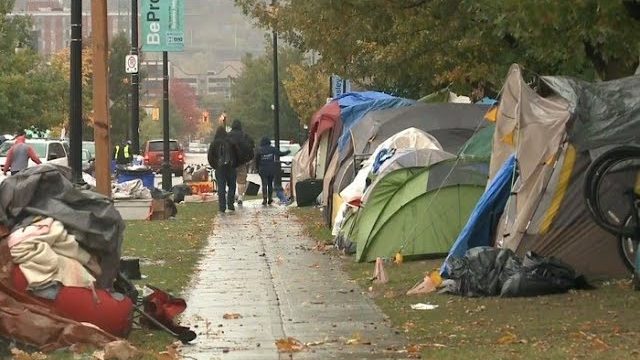
A Point-in-Time (PiT) Count provides an estimate of the number of people experiencing homelessness in a specific geographic area on a single night. It records where individuals spent the night, whether in shelters, transitional housing, or unsheltered locations.
Its purpose is to:
- Improve local understanding of homelessness
- Track changes over time
- Compare results over time and with other communities, to check for completeness and identify trends
- Contribute to a national picture of homelessness
- Inform efforts by community-based organizations, health and social service providers, and municipalities to meet the immediate needs of people experiencing homelessness.
- Inform system planning and development of long-term strategies to prevent and reduce homelessness.
- Inform government and policy makers about the importance of continued investments from all levels of government to develop the continuum of housing and support services required to prevent and reduce homelessness.
Survey
The survey is a set of standardized survey questions administered directly to individuals experiencing homelessness. It costs of a set of Core Screening questions to determine whether someone is counted as being homeless and invited to participate in the detailed survey, then Core Survey Questions to help understand the experience of homelessness locally.
The survey includes a set of standardized questions that are administered directly to individuals experiencing homelessness to collect demographics, characteristics and experiences of homelessness to help community organizations and all orders of government better understand and serve individuals experiencing homelessness in Canada.
Its purpose is to:
- Identify populations that are over-represented among people experiencing homelessness
- Help to better understand the pathways into homelessness to strengthen prevention services in those areas
- Highlight areas of greatest need in order to effectively target resources to them
Funding
The Designated Communities (DC) funding stream provides funding to 64 urban communities outside the territories. Eligible projects must respond to the priorities in the community plan to ensure they contribute to achieving the community-wide outcomes set by the Government of Canada and the community. Projects are selected based on local priorities through inclusive governance structures.
Organizations in Designated Communities can apply for project funding by contacting their local Community Entity.
Examples
- 2023 Hastings County Enumeration Report
- 2024 Hastings County Enumeration Report
- 2024 Hastings County Reaching Home funding
- 2024 Kingston Enumeration Report
- 2024 Peterborough Enumeration Report
- 2024 Ottawa Enumeration Report
Designated Communities must develop a Community Plan before each funding cycle
Communities receiving funding from the Designated Communities streams must develop a Community Plan at the start of each funding cycle that includes the following components:
Reaching Home directives
- An investment plan indicating the intended allocation of Reaching Home funding towards eligible activity areas.
- Work that will be undertaken to:
- Implement, maintain and improve Coordinated Access;
- Increase data quality and strengthen the Outcomes-Based Approach (including maintaining person-specific data that is real-time and comprehensive, which is used to generate a Unique Identifier List); and,
- Use data to drive the prevention and reduction of homelessness at the community level.
- Details on how the Community Plan was informed by community engagement, including how the Indigenous Homelessness Community Entity and Community Advisory Board (where the Indigenous Homelessness and Designated Communities streams co-exist) and other Indigenous partners in the community collaborated in the development of the Community Plan and how their input and priorities were integrated into the final product.
- Measures to be undertaken to meet the needs of Official Language Minority Communities.
- Identification of other funding sources available to address homelessness in the community.
Examples
- 2019-2024 Belleville Community Plan
- 2019-2024 Hamilton Community Plan
- 2024-2028 Hamilton Community Plan
- 2019-2024 Kingston Community Plan
- 2019-2024 Peterborough Community Plan
- 2024-2028 Peterborough Community Plan
Designated Communities must publish Community Homelessness Reports annually
Designated Communities will be required to adopt an outcomes-based approach, where they work to achieve set community-level outcomes and demonstrate progress and tangible actions to improve their homelessness response by reporting publicly on results in an annual Community Progress Report beginning in 2020-21.
Reports consist of three components:
- Coordinated Access Self-Assessment;
- Details on the Homeless Population Served in the Community (e.g. inflow and outflow); and,
- Community-Wide Outcomes and Indicators
With the exception of a reduction of 50% in chronic homelessness by 2027-28, communities will set their own targets for each outcome. The 4 core federally mandated outcomes that communities must track are:
- Fewer people experiencing homelessness
- Fewer people who are newly homeless
- Fewer people who return to homelessness
- Fewer people experiencing chronic homelessness
All communities that receive funding from the Designated Communities stream and the territorial capitals funded under the Territorial Homelessness stream are required to complete an annual Community Homelessness Report to self-assess their progress with Reaching Home implementation.
The Community Homelessness Report supports local discussions and decision making related to priorities, challenges and opportunities, using all of the information about homelessness currently available at the community level.
Communities must use their Reaching Home outcome data, as reported in their Community Homelessness Reports, to highlight where they should focus their efforts to prevent and reduce homelessness in the coming years. This includes developing and/or updating clear plans of action that help them to reach their homelessness reduction targets and to leverage the collective efforts of service providers working across the community, over and beyond Reaching Home-funded service providers.
Reaching Home directives
- A summary of Community Homelessness Report results must be made publicly available.
The Community Homelessness Report (CHR) is an annual Reaching Home reporting deliverable that supports communities to prevent and reduce homelessness using a more coordinated, systems-based and data-driven response.
The CHR was designed to support local discussions and decision making, using all of the information about homelessness currently available at the community level.
Communities are encouraged to use their CHR data to develop clear plans of action that help them to reach their homelessness reduction targets and to leverage the collective efforts of service providers working across the community, regardless of how they are funded.
Examples
- 2022 Hastings County CHR
- 2023 Hastings County CHR
- 2024 Hastings County CHR
- 2023 Peterborough CHR
- 2024 Peterborough CHR




Comments
We want to hear from you! Share your opinions below and remember to keep it respectful. Please read our Community Guidelines before participating.