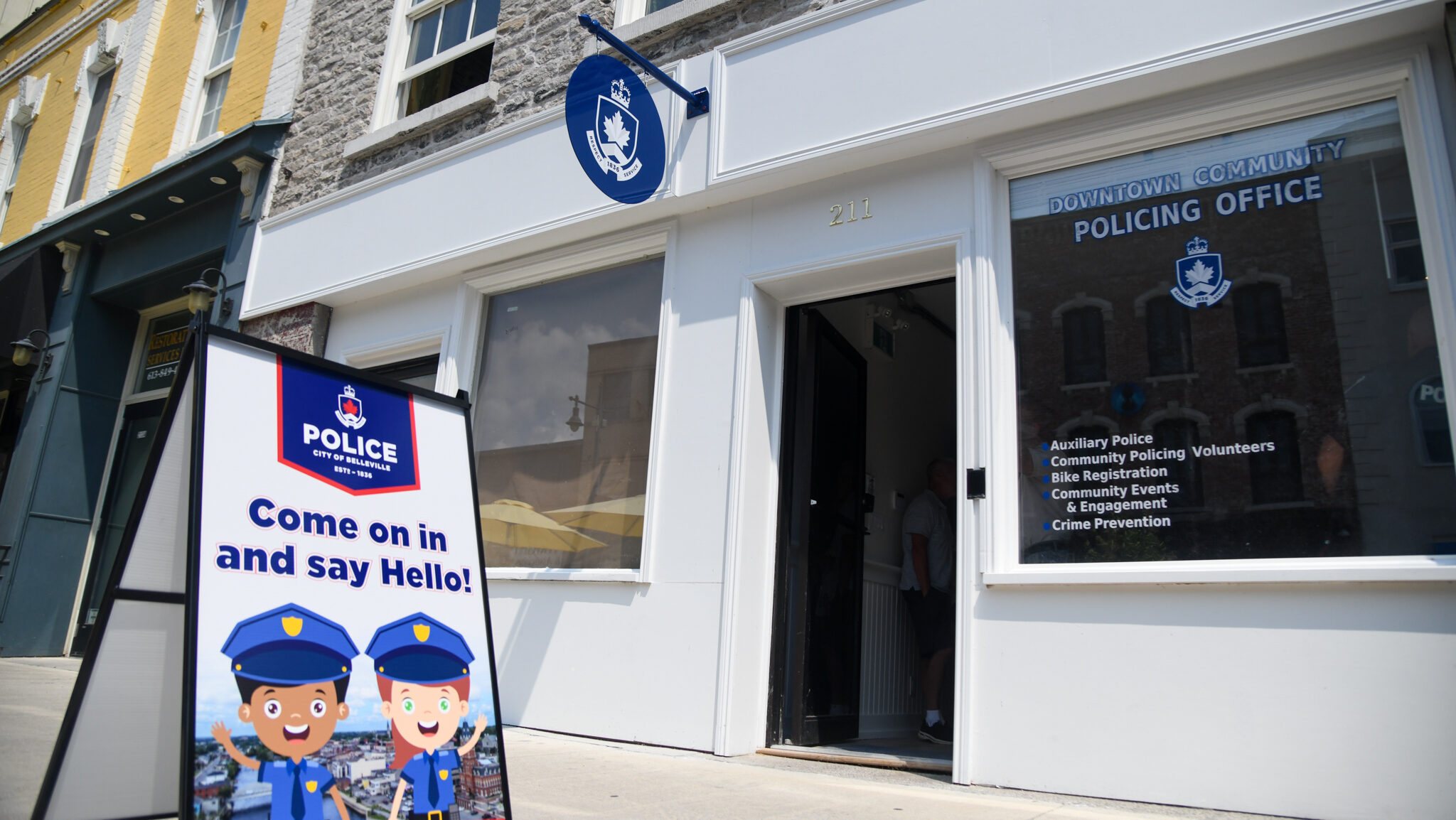
The Community Policing Office opened in downtown Belleville in mid-July 2024 at 211 Front St, Belleville, ON K8N 2Z4, a property owned by Paul Dinkel of Dinkel’s and Paulo’s Restaurants. The creation of the satellite office was spearheaded by Dinkel and Mark Turner, downtown developer and owner of Restoration Service Inc., offering the space to Belleville Police Services.
Some prominent business members in our community, downtown merchants brought forward. We were very lucky in that Paul Dinkel of Dinkel’s offered up the space. The DBIA contributed, as did some of the business owners, to renovating the office space down there.
Acting Police Chief Chris Barry
While not an official satellite police station, the public-private partnership is being celebrated by local businesses, but raises questions about the growing role of private funding in public policing.
Funding
- Space and renovations: Donated and largely funded by Dinkel.
- Operating support:
- $10,000 in donations from downtown merchants
- $4,000 from the Belleville Downtown Business Improvement Area (DBIA)
- DBIA committed to covering the first year’s rent
- Police contribution: About $6,000 for equipment and setup, absorbed by the 2024 capital budget.
We had the ideal spot for that, it doesn’t have to be a big space
It’s been approved by the city and police and we want to welcome the police.
Paul Dinkel
$6,000 in public funds used to outfit the space
Downtown businesses have generously provided the space for this initiative, including signage and ongoing support. This collaboration between the police service and downtown stakeholders demonstrates the spirit of collaboration and underscores the importance of public-private partnerships in addressing community needs. The Belleville DBIA has agreed to cover the rent for this location for 1 year and most of the costs of upgrading the office area were covered by the landlord Paul Dinkle. The costs to the Service for outfitting the location came in at approximately $6000 and were absorbed by our 2024 capital budget.
Report to Belleville Police Services Board
A major milestone in 2024 was the opening of our new downtown Community Policing Office. This location quickly became an important hub for connecting with residents, providing support, and strengthening relationships where people live, work, and gather. Serving as a base for officers patrolling the downtown area, the space allowed members to complete necessary paperwork without returning to the main police station. The office is available to officers 24/7 and open to the public, improving accessibility and responsiveness in the heart of the city.
To support this new space, full technological infrastructure was deployed, including network connectivity, monitoring displays, security systems, and workstation setups, ensuring seamless integration into our broader operations.
2024 Annual Report
Very little cost to the taxpayer for this and we’re very lucky that we’ve got the support of our downtown merchants.
Acting Police Chief Chris Barry
On another front, the DBIA and its members have funded and opened is a community policing office to increase presence of police, and support their efforts downtown. The New Chief and Deputy Chief have met with us to open the centre and at a members meeting recently and all are agreed that this will be a valuable addition to Front St. bringing improved policing presence downtown.
DBIA Chair Maury Flunder reports to the Economic Development Committee October 24, 2024
Goals of the office
The goal of the presence of three police officers, with a police car parked on the street is to:
- Increasing police presence
- Enhance the sense of security
- Boosting police response times to calls for assistance
We have a significant problem with those suffering from homelessness and addictions, I don’t think that’s a secret. The community’s spoken out quite loudly that they really, really want to see our officers as much as they can.
Acting Police Chief Chris Barry
Downtown business owners want protection from those with housing, mental health and drug addiction challenges
Downtown business owners say their expectations for the new community police office will help deter those with housing, mental health and drug addiction challenges from acting out on downtown businesses and their waning customers.
They say they’re in a Catch-22:
Complain too publicly about unfortunate problems in the downtown and they risk driving away even more customers away — stay quiet and political leaders may not feel any pressure to find real solutions to meeting the crisis head on.
The Intelligencer
We’ve lost teachers who will not come back to the Pottery Studio because they are scared to death when someone walks in. We’ve locked doors, we have cameras, we have doorbells, we have a lot of children who take classes and are not coming back in September. Why? Because they don’t feel safe. One of the moms was assaulted downtown
Trevor Hoskins, senior pastor at Core Harvest Ministries Inc.
It just puts us in a position where we’re under siege and it’s getting worse in a sense that it just seems to becoming normalized and there’s nothing being done about it. It puts you in the position where mentally, it can be fatiguing
Zubin Gillespie, owner of Blue Violin at 212 Front Street, which has two $500/night Airbnbs
It’s just becoming blatant, they’re getting away with more. That translates into violence because there were several acts of violence in the last week or so fueled by drugs and discontent of these people. It’s getting worse; we’re under siege and we’re sliding into chaos
Mark Turner, owner of Restoration Service Inc. and downtown developer
Why are we putting ourselves ‘behind bars’ to feel safe
Why do I have to lock my own door so that I can control who is coming in? So, who is behind bars now? The community is.
Mike Malachowski, owner of longtime downtown business Funk and Gruven A-Z antiques and furniture
Community Resource Unit
The Community Resource Unit will most often occupy the Community Policing Office during the day.
It’s not going to be staffed on a regular basis, it’s more of a drop-in centre for officers. It’s a win
Acting Police Chief Chris Barry
The CRU increased their presence at the downtown office to increase proactive patrols and liaising with community stakeholders. Retired Special Constable Harry Burley has also taken a volunteer position to ensure the office is staffed on a regular basis, in addition to several members of the auxiliary unit.
Officers
One of the innovative aspects of this initiative is the utilization of a hybrid staffing model to mitigate costs while ensuring community engagement. The office will be staffed by a combination of Community Policing volunteers, members of our Belleville Police Service Auxiliary Unit, and Community Response Unit officers.
When not in the office, the CRU may be attending policing events, strolling the streets or responding to calls throughout the city. Other officers out of the CRU will also be using the office as an auxiliary to complete office duties, have meetings, etc.
Downtown Belleville