
Voters are not able to decline or refuse their ballot in federal elections in Canada.
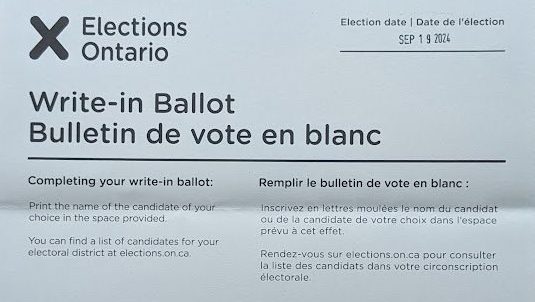
This is unlike provincial elections in Ontario, Manitoba, Saskatchewan and Alberta, where voters have the option to decline their ballot by handing it back to the election official or writing “declined” on it.
Making this option available would require the federal government to make changes to the Canada Elections Act.
Our Action Playbook has many ways to raise your concerns and impact the political decision-making processes.
Elections Canada recommended adding the option to decline ballots in the early 2000s
Elections Canada recently recommended that federal legislation be changed to allow people to officially decline their ballots, and for that to be recorded alongside spoiled ballots so that the public will know how many people are making a peaceful protest against the process.
The recommendation came in the wake of a bizarre form of protest during the 2000 general election, when at least eight members of the Edible Ballot Society ate their ballots at advance polling stations in Edmonton. The stunt was a protest against what the society, formed in 1997, saw as the superficial differences between candidates from different parties and the historical gap between the popular vote and standings in the House of Commons. The activists brought woks and blenders to the voting booths, adding the recyclable cardboard ballots to other ingredients to make stir-fries and smoothies. Others across Canada were reported to have put the ballot in ready-made sandwiches or eaten it unadorned.
Three of the ballot eaters were charged with “unlawfully and willfully altering, defacing or destroying a ballot or the initials of the Deputy Returning Officer signed on a ballot contrary to section 167(2)(a) of the Canada Elections Act thereby committing an offence under subsection 489(3)(e).” Two others were charged with having the intention to delay or disrupt the electoral process. In the end, two of the ballot eaters were acquitted in April 2002 and charges were stayed against the others.
Canada Votes 2004 – Daily Answer – CBC (2004)
Why decline your ballot?
Declined ballots are counted, unlike staying home and not voting, spoiling your ballot, or submitting a blank ballot which do not count.
A voter might choose to decline their ballot when they feel that none of the options available on the ballot represent their views or if they disagree with the candidates or process presented. It is a way for engaged citizens who are willing, able and ready to vote to show their dissatisfaction with the choices available to them. ie. “I care enough to take the time to vote, but reject the options presented to me, please provide alternatives.”
Voting for a small party is an alternative to declining your ballot
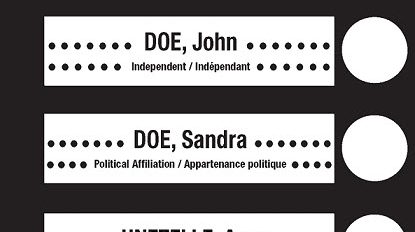
While declining your ballot is not an official option, one alternative is to vote for a smaller political party or non-affiliated/independent candidate that best represents your views and values, even if they are perceived as having small chance of winning.
Even if they don’t win, small parties can influence platforms and grow over time.



Comments
We want to hear from you! Share your opinions below and remember to keep it respectful. Please read our Community Guidelines before participating.